
New Shooters
The caliber is stamped on your gun, plain FMJ is what you practice with, and 100 to 200 rounds is a first pistol session.
Buying your first box of ammunition comes down to three things. Get the caliber right — it is stamped on the gun, so there is nothing to guess at. Buy plain full metal jacket range ammunition, because that is what practice is for. And bring roughly 100 to 200 rounds if it is a pistol, which is more than most first-timers expect and less than the internet will tell you. Everything below is the reasoning behind those three sentences, written for somebody standing in a parking lot in San Diego wondering whether they are about to buy the wrong thing.
Step one: know your caliber, and read it off the gun
Caliber is the single thing you cannot get wrong, and it is also the easiest to get right, because the manufacturer already wrote it on the firearm for you. Do not go from memory, from what a friend said, or from what was on the shelf last time.
- Semi-auto pistol: stamped on the side of the barrel, usually visible through the ejection port with the slide locked back, and often on the slide as well.
- Revolver: along the barrel, on one side or the other.
- Rifle: on the barrel just forward of the receiver, or on the receiver itself.
- Shotgun: on the barrel, and it gives you two numbers — the gauge and the chamber length, such as 12 gauge 2-3/4 inch. You need both.
- Nowhere obvious: the owner's manual and the original box both carry it.
What you are looking for reads like 9mm, 9x19 or 9mm Luger on a pistol; .40 S&W or .45 ACP on a larger one; .223 REM or 5.56 NATO on a modern sporting rifle; .308 WIN on a bolt gun; .22 LR on a rimfire. Those are the markings we see across the counter most days.
If the stamping is worn, tucked under a rail, or simply does not look like any of the above: take a photo of your barrel markings and text it to 310-499-3499, tell us you're a new shooter buying ammunition for the first time, and we'll read it back to you before you drive out. That happens several times a week and nobody here thinks anything of it.
The near-misses that catch people
Caliber names were not designed to be told apart at a glance. 9mm Luger is not 9mm Makarov. .380 Auto is sometimes printed as 9mm Short and it is not 9mm Luger. A .357 Magnum revolver will happily shoot .38 Special; a .38 Special revolver must never be fed .357 Magnum. A rifle marked 5.56 NATO will shoot .223 Remington, but a rifle marked .223 should not be fed 5.56. If two boxes on the shelf look interchangeable, that is exactly the moment to ask.
FMJ versus hollow point, in plain language
Almost every box you will pick up is one of two things, and the difference is what the bullet is built to do when it hits something.
Full metal jacket — the range ammunition
FMJ means a lead core wrapped in a harder metal jacket. It is built to be cheap, consistent and reliable, it feeds well, and it is what practice ammunition is. It is sold in boxes of 50 and in cases running into the hundreds, and it is the correct choice for essentially everything you will do on a lane: sights, trigger, grip, reloads, and the safety habits that actually make somebody a shooter. On a paper target at seven yards, nothing more expensive teaches you anything more.
Jacketed hollow point — the defensive load
JHP has a cavity in the nose, so the bullet is designed to expand in a controlled way rather than pass straight through. That is why it costs several times what range ammunition does per round, and why it is sold in boxes of 20 or 25 rather than 50. It is the round that lives in a home-defense gun. It is not the round you burn a Saturday morning on.
The pattern that works for a new owner is boring and correct: do the overwhelming majority of your shooting with range FMJ, then, once you are comfortable with the gun, add one good defensive load and run a small amount of it through the firearm to confirm it feeds. Keep the rest loaded. If you want the long version of that argument, we wrote it out in range ammo versus self-defense ammo, and the ammo catalog lists what we keep on the shelf in each caliber, in both flavours.
How much ammunition should a new shooter buy?
More than one box, less than a case. Running dry twenty minutes into a lane you paid an hour for is the most common regret we hear at this counter; the second is a closet full of a caliber somebody decided they did not enjoy.
- Pistol — 9mm, .40 S&W, .45 ACP: 100 to 200 rounds of range ammunition for your first few trips. Add one box of a defensive load later, once you know the gun.
- Rifle — .223, 5.56, .308: 60 to 120 rounds. Rifle shooting is slower and you will spend more time looking at the target than shooting at it.
- Shotgun — 12 gauge: 25 to 50 shells for a general outing. If you are shooting clays, a flat of 100 to 250 makes more sense, because one round of trap or skeet is 25 on its own.
Buy one box more than your plan rather than five. Cases have their place, and the bulk ammo buying guide works through when the math genuinely lands in your favour — but committing to 1,000 rounds of a caliber you have shot twice is a decision you make with a shrug and regret with a shelf. Catalog pricing moves with the wholesale market every week, so it is a phone call rather than a number on this page; the fixed-price, fixed-quantity offers are published on this week's deals, in-store only.
Indoor ranges, steel core, and the magnet test
This is the section first-timers skip, and it is the one that most often ends a trip in the parking lot. Indoor ranges set their own ammunition rules to protect their backstops, their traps and their ventilation, and those rules are not negotiable at the counter.
- No steel core. A steel penetrator chews up a steel backstop and can throw fragments back down the lane. This is the near-universal indoor ban.
- Often no steel case and no bi-metal jacket. Some ranges recover and sell their brass and will not accept steel cases in the mix; others treat bi-metal jackets the same way they treat steel core. A magnet held to the case and to the bullet nose tells you both answers in about two seconds — if it sticks, assume the range will say no.
- Never tracer or incendiary, indoors or out, at any range you will plausibly visit.
- Some ranges cap calibers, particularly rifle calibers on an indoor lane.
- Some do not allow outside ammunition at all, especially if you are renting a firearm from them — you shoot what they sell.
So call the range before you buy, not after. Ask whether you can bring your own, which types are excluded, whether your caliber is allowed on their lanes, and whether renting a gun obliges you to buy their ammunition. Write the answers down and buy to them. Outdoor ranges are generally looser, but “generally” is doing real work in that sentence — ask anyway. Tell us what they said and we will steer you to something that clears their rules; brass-cased FMJ is the safe default almost everywhere.
What California asks for at the counter
Buying ammunition in California means an eligibility check run through the state Department of Justice at the counter, plus a fee the state sets and charges per attempt, so bring your California driver's license or ID card — and a second document proving lawful presence if it reads FEDERAL LIMITS APPLY — along with proof of your current address if you have moved recently. The whole process, including which check you will get, why some people are routed to the slower one, and how to fix your DOJ record for free before you drive out, is laid out on our California ammo law page, and it is worth ten minutes before your first purchase rather than a surprise at the register.
That is general information and not legal advice — we sell ammunition, we are not a law firm, the state changes its fees by regulation, and the rules are being litigated right now. Our legal content was last reviewed ; check anything that matters against the California DOJ — Ammunition Purchase Authorization Program.
Four mistakes we see from new shooters
- The wrong caliber. .380 Auto bought for a 9mm, .40 S&W bought for a 10mm, .223 bought for a rifle that should not be fed it. Every one of these is prevented by reading the stamping on the gun, or by showing us the photo of it.
- Showing up unprepared for the paperwork. The ID is in the wallet but the address on it is two apartments out of date. Sort that out before the drive, not at the counter with a queue behind you.
- All defensive ammunition, no practice ammunition. Somebody spends their whole budget on two boxes of premium hollow point and leaves with fifty rounds to learn on. Reverse it: range FMJ first, in volume, then one good defensive load.
- Not asking. This is the expensive one, and the easiest to fix. Nobody who works here started out knowing this, and a question at the counter costs nothing while a wrong box costs a trip.
How we handle new shooters at this counter
Say the words “this is my first time buying ammo” when you walk in and the whole conversation changes shape. We will ask what you are shooting and where you are going, pull the right box, and turn the label around and explain what the numbers on it mean — grain weight, bullet type, case material, count. We will tell you when the cheaper remanufactured option is genuinely fine for what you are doing, which it often is, and we will tell you when to spend the extra, which is rarer than the internet suggests. We will also tell you when not to buy something, because a customer who trusts us comes back and a customer who was upsold does not.
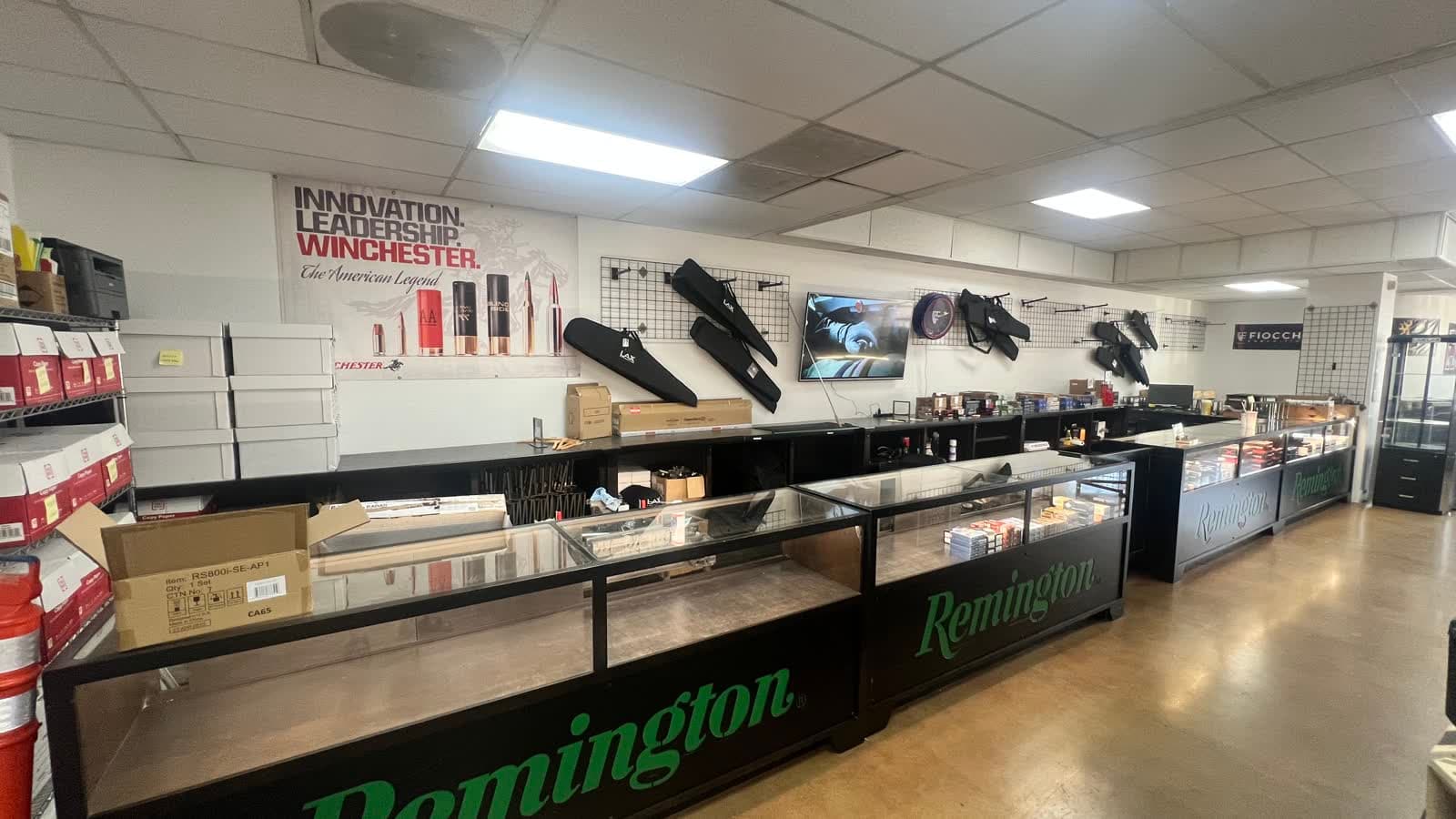
Two things to know before you plan the route: we sell ammunition and accessories only, so no firearms, and there is no shooting range at this location — we are the stop on the way to one. Ammunition is handed over face to face at the counter in Kearny Mesa, because California law requires it; there is no online checkout on this site and we do not ship. Se habla español, so ask in whichever language you would rather use.
Your first-purchase checklist
- Caliber confirmed off the gun, the manual or the original box — photographed on your phone if you are not certain.
- California ID in hand, plus proof of your current address if you have moved, and a second document if the ID reads FEDERAL LIMITS APPLY.
- Range chosen and called: outside ammunition allowed, your caliber allowed, and the excluded types written down.
- A quantity decided — 100 to 200 rounds of pistol range ammunition is the normal first buy — and a budget in mind. Call us for today's pricing on what you want, or check the deals board first.
- Eye and ear protection and targets, which we stock alongside the ammunition, so one stop covers it.
- Our address in your maps app: 4411 Mercury St, Suite 103, San Diego, CA 92111.
Text us before you drive out
The fastest version of this entire article is a text message. Send the make, model and caliber of what you are shooting to 310-499-3499, or a photo of the markings if you are not sure, and we will tell you exactly what to buy before you get in the car. Call 858-987-0509 if you would rather talk it through — during store hours a person picks up, and after hours it gets forwarded.
Or just come by. Hours and directions are one click away, the catalog tells you what we carry by caliber before you make the trip, and the deals board is worth a look on the way in — a first-trip quantity of range ammunition is on it more weeks than not.
Keep reading
Next Stop
The related articles, then the three pages that answer most of what people call about.
- Bulk Ammo Buying Guide: When Cases Make Sense (and When They Don't)A case is only a bargain if it is a caliber you shoot, a price that is genuinely better, and a shelf you actually have.
- Buying Ammo for Your First Range Trip (San Diego Edition)Plain range ammo in the right caliber, a phone call to the range first, and about twice as much as you think you need.
- Range vs Self-Defense Ammo: What's the Difference?Two boxes of 9mm on the same shelf, and only one of them belongs in the gun by your bed.
- The ammo catalog, by caliberPistol, rifle, rimfire and shotgun, with what each load is for and what we keep on the shelf.
- California's ammo law, step by stepThe eligibility check at the counter, the ID that works, and how to fix your DOJ record for free first.
- This week's in-store dealsFixed price, fixed quantity, this week only — redeemed at the Kearny Mesa counter.
Every purchase is made in person at the Kearny Mesa counter — there is no cart on this site, and we don't ship ammunition. Back to all articles.
Where We Are
LAX Ammo San Diego4411 Mercury St, Suite 103San Diego, CA 92111
Kearny Mesa, San DiegoOpen in Google Maps
Hours
- Mon – Fri
- 10:00 AM – 6:00 PM
- Sat – Sun
- 10:00 AM – 5:00 PM
Closed Thanksgiving Day, Christmas Day and New Year's Day.
Call or Text
858-987-0509Calls only
310-499-3499Text only
Text anytime. Anytime — immediate during business hours, forwarded after hours.
Before You Visit
- Bring your California ID — every ammo purchase needs an eligibility check.
- Purchases happen at the counter. No online checkout, and we don't ship ammo.
- Ammunition and accessories only. No firearms, no range at this location.
Se habla español
How California's ammo law works