The record behind the counter check
Almost every ammo denial we see is a records problem, not an eligibility problem. Here is what the state holds on you, why it fails, and how to fix it for free.
Why this matters before you drive out
A Stale Record Costs You the Cheap Check
The person at the counter is almost always entitled to buy. The DOJ simply cannot match the name, address, date of birth and ID number being typed in against the record it already holds — and with no match, the fast, cheap check is not available to you.
The short version
You do not choose your eligibility check. The DOJ system picks one for you, based on whether your details match an entry in the Automated Firearms System. A buyer who has kept that entry current is approved in a minute or two at the lower state fee. A buyer who moved two years ago and never thought about it is routed to a manual review that takes days and costs almost four times as much — and finds out at the register.
Correcting the record is free, takes a few minutes, and only the DOJ can do it. That is the entire page in three sentences; everything below is the detail.
What the state charges
These are fees the California DOJ sets by regulation. Vendors collect them at the counter on the state's behalf. They are not our pricing, they are separate from the cost of the ammunition, and they are charged per attempt rather than per successful purchase.
- Standard check (SAEC)
- $5Usually a minute or twoYour details match an AFS record. 11 CCR 4282
- COE verification
- $5Usually a minute or twoYou hold a current Certificate of Eligibility. 11 CCR 4285
- Basic check
- $19May take several daysNo AFS record, or the details do not match the one on file. 11 CCR 4283
Verified against the California DOJ on . The state raised the Standard and COE fee from $1 to $5 on 1 July 2025, so any page still quoting the old one-dollar figure is out of date — including, until recently, our own. The state can change these again by regulation; the DOJ's fee list is the figure that governs.
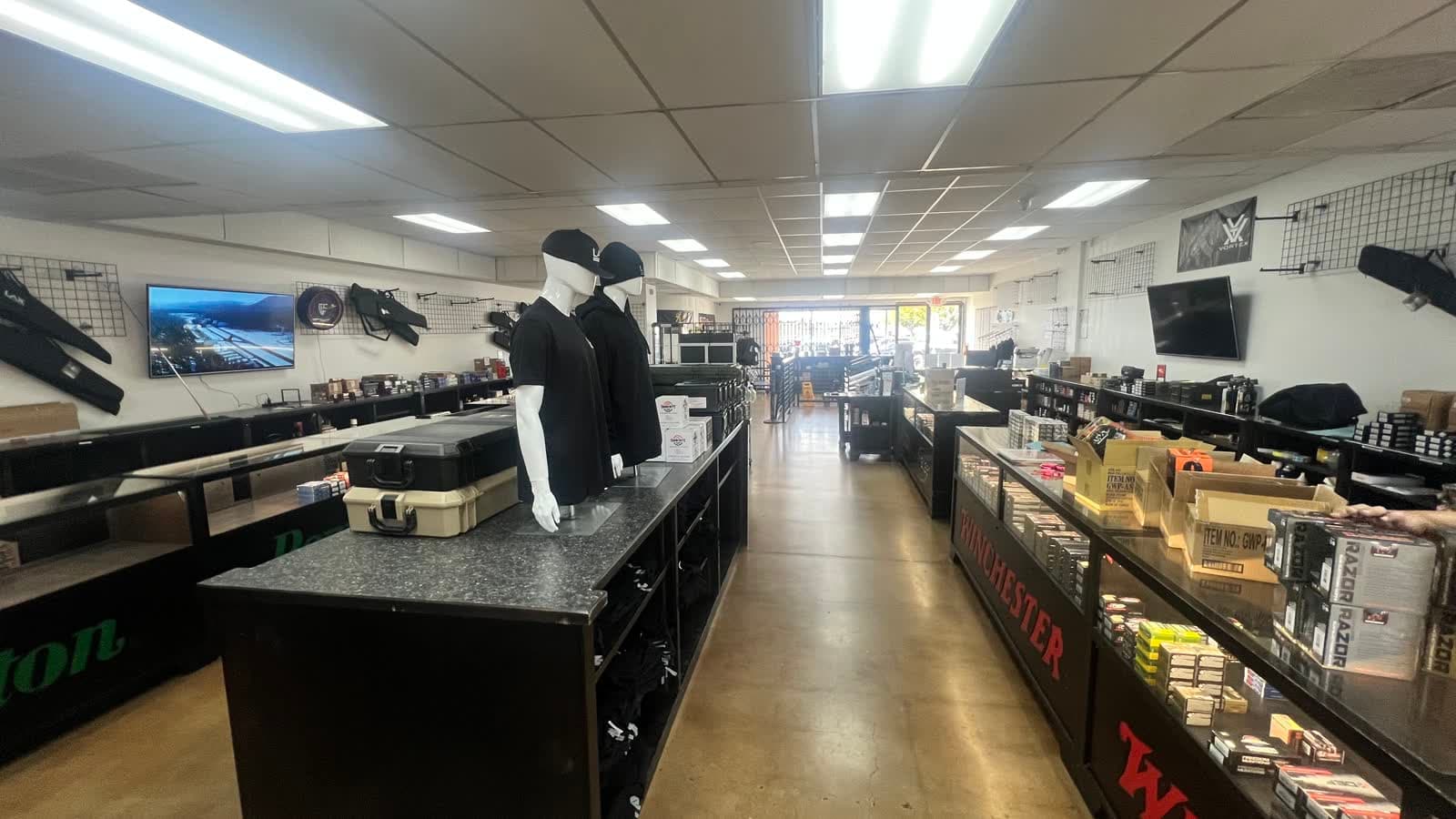
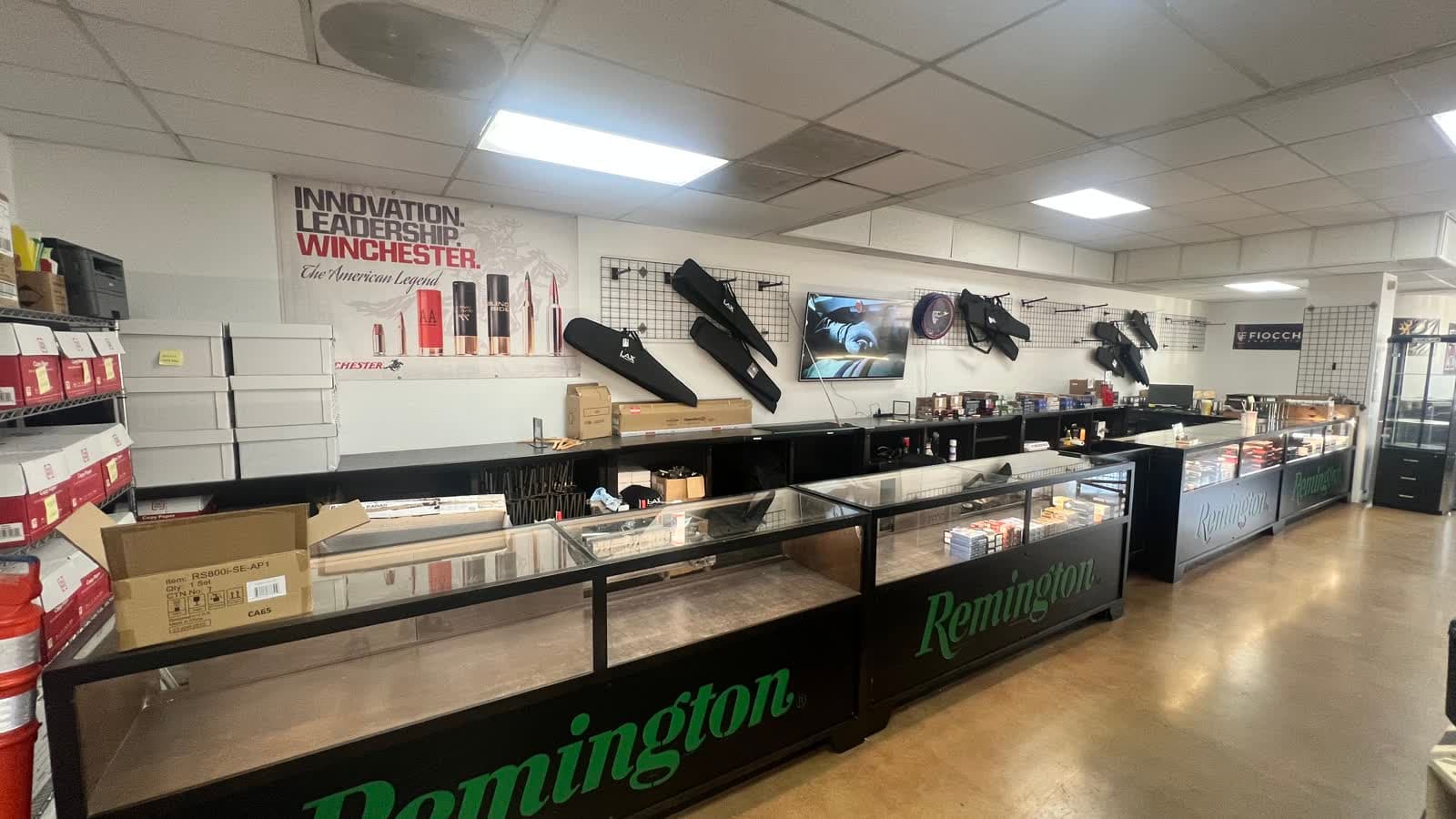
Worth saying plainly before you plan a trip: we sell ammunition and accessories only. No firearms, and no shooting range at this location. Every purchase happens face to face at our counter in Kearny Mesa — there is no online checkout on this site and we do not ship ammunition. Se habla español.
The database itself
What the Automated Firearms System Actually Is
Everybody shortens it to AFS. It is the California DOJ's database of firearm records, and it is the thing the cheap check is checking against.
Alongside which firearm is associated with whom, AFS holds identifying details about you: legal name, date of birth, residential address, and a California driver's license, identification card or military ID number. Those four or five fields are the entire basis of the Standard ammunition eligibility check. The system is not forming a judgment about you. It is comparing strings.
Your details get in there in a handful of ways: you bought a firearm through a California dealer, you registered an assault weapon, you filed a voluntary Firearm Ownership Report, you hold a CCW permit, or law enforcement entered something. Notice what is missing from that list — nothing you do at the DMV, and nothing you do when you move house, puts you in AFS or updates you in it.
That gap is the whole problem. Californians reasonably assume the state has one view of them. It does not, and no part of the process warns you otherwise until a vendor submits a check and it comes back rejected.
Why the match fails
The Four Things That Usually Cause a Mismatch
Read these looking for yourself. If one of them describes you, your record is worth checking before you spend a state fee finding out at the counter.
You moved
The most common cause, by a distance.
You changed your address with the DMV, a new licence arrived in the post, and you reasonably assumed the state now knows where you live. The DMV and the Department of Justice are separate systems and updating one does nothing to the other. Your AFS record still shows the old address, the addresses do not match, and the check is denied.
Your name changed, or was never spelled the way you spell it
Marriage, divorce, a dropped hyphen, a middle name entered as an initial.
This is a data match, so a small difference is still a difference. A suffix that appears on one document and not the other is enough. So is a clerk who typed a date of birth wrong a decade ago and nobody caught it, because nothing in the system ever tells you.
You have never bought a firearm through a California dealer
It surprises people who genuinely do own guns.
As a rule of thumb rather than a guarantee, handgun transfers have been recorded since around 1996, while long guns were not recorded in AFS until 1 January 2014 — years widely cited by California firearms attorneys rather than published on a single DOJ page, so treat them as a guide. Inherit a rifle, buy a shotgun in 2005, or shoot rented guns and own none, and there may be nothing with your name on it. No record means no match.
The entry is simply stale
It was accurate when it was created, and then life happened.
An identification card reissued with a different number, a phone number you gave up years ago, a record created before you changed anything at all. None of it reflects on you as a buyer, and none of it announces itself. You find out at the counter, which is the worst possible place to find out.
The pattern underneath all four
None of these is a question about whether you are allowed to buy ammunition. Every one of them is a string that does not match another string. That is genuinely good news: a records problem has a fix, it is free, and you can do it tonight from your kitchen table.
Before you plan a purchase
Warning Signs Worth Two Minutes of Your Time
If any of these is true of you, look at your record before you plan a trip rather than after. There is no cost to checking and no downside to being sure.
You have moved since your last dealer purchase
Including a move within San Diego. The distance is irrelevant; the string has to match.
Your legal name has changed
Or you go by a shortened version of it day to day and are not certain which one the state holds.
Your ID has been replaced or reissued
A new number on a replacement licence or identification card is a new number as far as the match is concerned.
Your only firearms are older long guns, inherited, or bought privately
Long gun transfers were not recorded in AFS until 2014, so ownership is no guarantee of a record.
You have never bought a firearm through a California dealer
Perfectly normal, and it means the Basic check is your route until you either file a Firearm Ownership Report or obtain a Certificate of Eligibility.
The address on your ID is not where you live
Or is not what you believe the DOJ holds. Those are two different problems and both of them fail the same way.
Your ID reads FEDERAL LIMITS APPLY
Not an AFS problem, but it is the other thing that turns people around at the counter: that card is not a REAL ID, so bring a passport or certified birth certificate as well, every visit.
Free, online, DOJ only
How to Correct Your AFS Record
There is no back door and no shortcut, and no store can do this for you. It is a state process, it runs through the DOJ's own portal, and it does not cost anything.
Find out what the DOJ actually holds on you
You cannot correct a record you have not read. If you are unsure what is on file — or whether anything is on file at all — request your firearm records from the DOJ using form BOF 053, the Automated Firearms System Request for Firearm Records. It comes back with the identifying details the state has for you and the firearms associated with them. Skip this step only if you already know exactly which field is wrong, such as an address you changed last month.
Create or log in to your CFARS account
Every self-service correction goes through the California Firearms Application Reporting System at cfars.doj.ca.gov. It is the DOJ's own portal, it is free to use, and it is the only route — no store, ours included, can reach into a state record on your behalf. Set the account up before you need it; registration is the part people leave until the night before.
Open the Automated Firearms System Personal Information Update
Inside CFARS, choose Automated Firearms System (AFS) Personal Information Update. This is an electronic application rather than a paper form, which is worth knowing because the DOJ's paper form numbers get quoted at each other online — BOF 053 requests your records, it does not change them. The update application is where the change is actually made.
Correct the fields that decide the match
You can update your legal name, date of birth, residential address, and your California driver's license, identification card or military identification number. Those are precisely the fields the Standard check compares, so an entry that is right here is an entry that matches at the counter. There is no fee for the update.
Upload the supporting document, if one is needed
An address change generally stands on its own. A name or identification-number change has to be evidenced: expect to upload a driver's license or ID card, a marriage licence, a court order for a name change or restoration, a birth certificate, or military orders. Have the file ready before you start rather than abandoning a half-finished application to go and scan something.
Submit it early, then come in
The DOJ notifies you by email or through your CFARS account when the update is processed, and publishes no guaranteed turnaround time. That single fact is why this is a job for a quiet evening weeks ahead of a purchase, not for the morning of one. Once it is processed, the Standard check becomes available to you again.
One case the update does not cover: firearms you own that are not in AFS at all. Those go on the record voluntarily through a Firearm Ownership Report, filed in the same CFARS account. That one does carry a per-firearm state fee — check the current amount inside CFARS rather than trusting a number on any website, ours included. And if you own no firearms at all, which is perfectly normal, there is nothing to put in AFS: the Basic check is your route each time unless you obtain a Certificate of Eligibility.
Stock & deal questions
Not sure what the state has on you?
Call or text before you drive out. We will tell you which check you are likely to get, what to bring, and whether it is worth fixing your record first. It is a five-minute conversation that saves a wasted trip and a state fee.
Se habla español
- Ask if your caliber is in stock today, and what it runs.
- Ask what the in-store Deal of the Week is before you drive out.
- Ask what to bring for the California eligibility check.
- Ask anything about a load, a caliber, or your gun. No pressure, no attitude.
- Phone
- immediate during business hours
- Text
- anytime — immediate during business hours, forwarded after hours
- Hours
- Mon – Fri 10:00 AM – 6:00 PM · Sat – Sun 10:00 AM – 5:00 PM
Setting expectations
What We Can and Cannot Do at the Counter
Worth knowing before you arrive, because the honest limits are narrower than people hope and the useful help is broader than they expect.
What we can do
We can tell you which check was attempted and what the system returned. We can hand you the tracking number that lets you look up the stated reason at CFARS. We can usually tell you whether what came back looks like a records mismatch or something else. And we can point you at the exact application to file. Most of that is better done on the phone before you drive out than at the register with a queue behind you — call or text and ask for it.
What we cannot do
We cannot change a state record, override a DOJ result, re-run a check for free, or work around a denial. Splitting a purchase does not help. Asking somebody else to buy on your behalf is a crime that would hurt you both, and nobody at any counter should offer it. If the reason that comes back is a genuine prohibition and you believe it is a records error rather than a real one, that is work for a California firearms attorney, not for a shop — our guide to buying ammo in California goes through the denial outcomes one by one.
The five minutes that saves the trip
Log into CFARS, look at what the state has for you, fix whatever is wrong, and wait for it to process. Then come in, and the check is a formality that takes a minute or two at the lower state fee. That sequence is the whole difference between the two experiences people have at a California ammunition counter, and it is available to almost everybody who is currently having the bad one.
Common questions
AFS Questions We Get at the Counter
Real questions from real customers in Kearny Mesa, answered the way we would answer them in person.
What is an AFS record?
AFS stands for the Automated Firearms System, the California Department of Justice's database of firearm records. Alongside which firearm is associated with whom, it holds identifying details: legal name, date of birth, residential address, and a California driver's license, identification card or military ID number. When you buy ammunition, the Standard eligibility check compares what the vendor types at the counter against that entry. It is a data match, nothing more — which is why an entirely law-abiding buyer can fail it.
How do I find out what my AFS record says?
Request it from the DOJ. The form is BOF 053, the Automated Firearms System Request for Firearm Records, available on the DOJ's firearms forms page. It returns the identifying details the state holds for you along with the firearms associated with them. Note that BOF 053 only reads the record — the correction itself is a separate electronic application inside your CFARS account, and confusing the two is a common way to lose a fortnight.
Does it cost anything to update my AFS record?
No. The DOJ states plainly that there is no fee for updating your record through the Automated Firearms System Personal Information Update in CFARS. Nobody should ever charge you for it, and no ammunition vendor can do it for you. The only related thing that does carry a state fee is a Firearm Ownership Report, which adds a firearm you already own to the record — check the current per-firearm amount inside CFARS rather than trusting a number on any website, ours included.
I updated my address with the DMV. Does that update my AFS record?
No, and this is the single most common misunderstanding we hear at the counter. The DMV and the Department of Justice run separate systems. A new licence with your new address on it does not touch your AFS entry, so the address the vendor types still will not match the address the state holds, and the Standard check is denied. The AFS Personal Information Update in CFARS is a separate act you have to perform yourself.
Does a bad AFS record actually cost me money?
Yes, and this is the practical reason to care about a database. California sets the eligibility check fee by regulation: $5 for a Standard check or a Certificate of Eligibility verification, and $19 for the Basic check you are routed to when there is no AFS match. Those are state fees collected at the counter on the state's behalf, not store pricing. They are also charged per attempt, not per successful purchase — so a Standard check that fails on a mismatch is money already gone, and the Basic check that follows costs its own fee on top.
How long does an AFS Personal Information Update take?
The DOJ notifies you by email or through your CFARS account when it is processed, and publishes no guaranteed turnaround time. Treat it as a job for weeks before a purchase rather than the night before. If you are trying to plan around a specific trip, plan around the update being slower than you would like — there is no expedite option and no vendor can chase it for you.
I have never bought a firearm. Do I have an AFS record at all?
Probably not. Records land in AFS when you buy a firearm through a California dealer, register an assault weapon, file a voluntary Firearm Ownership Report, hold a CCW permit, or law enforcement enters something. If none of those applies, there is nothing to correct and nothing to match against, so the Basic check is simply your route each time. Two ways out of that: file a Firearm Ownership Report for firearms you already own, or obtain a Certificate of Eligibility if you qualify for one.
Can the store fix my AFS record for me?
No. Only the DOJ can change a state record, and only through your own CFARS account. What we can do is tell you which check was attempted and what the system returned, hand you the tracking number that lets you look up the stated reason at CFARS, usually tell you whether it looks like a records mismatch or something else, and point you at the exact application to file. We would far rather have that conversation on the phone before you drive out than at the register.
Does fixing my AFS record guarantee I will be approved?
No. A correct record makes the fast, cheaper Standard check available to you; it does not decide eligibility. The check still screens against the categories of people barred from owning or possessing ammunition under state and federal law. What a correction does reliably fix is the boring failure mode — the denial that has nothing to do with whether you are allowed to buy and everything to do with an address you changed in 2021.
Is the eligibility check still in force while Rhode v. Bonta is pending?
Yes. The Ninth Circuit panel ruling from July 2025 never took effect and was formally vacated when the court granted rehearing before an eleven-judge en banc panel in December 2025. That panel heard argument on 25 March 2026 and has not yet ruled. Every California ammunition purchase today goes through an eligibility check and carries the state fee. Even if the law were eventually struck down, expect further appeals and stays before anything changes at a counter, so keep your record current rather than waiting on a court.
The full purchase process — ID, age rules, what happens at the counter — is on our California ammo law page. Hours, payment and what we keep on the shelf are in the store FAQ, the ammo catalog shows what we stock by caliber, and this week's in-store deals are worth a look before you come in.
Last Reviewed and Legal Disclaimer
Last reviewed:
General information, not legal advice. This page describes California ammunition rules and the DOJ's records process as we understand them, to help you show up prepared. It does not create any professional relationship. The eligibility check is in force today; the litigation over it in Rhode v. Bonta is still pending before an eleven-judge Ninth Circuit panel that heard argument on 25 March 2026. A decision could issue at any time, nobody can reliably predict what it will say, and even a ruling against the state would very likely be stayed while further review is sought — so do not plan a purchase around it.
State fees are set by regulation and have moved before: the Standard and COE fee went from $1 to $5 on 1 July 2025. Cities and counties can add requirements of their own on top of state law. If anything here has changed since the review date above, the official sources win — always. Verify anything that matters with the California DOJ — Ammunition Purchase Authorization Program, and take an unusual situation or a denial you believe is a records error to a California firearms attorney.
Official sources
- California DOJ — ammunition purchase FAQs (lists all three check fees)
- California DOJ — ammunition purchase fee regulation ($1 to $5, effective 1 July 2025)
- 11 CCR 4283 — Basic Ammunition Eligibility Check, including the $19 fee
- 11 CCR 4282 — Standard Ammunition Eligibility Check
- 11 CCR 4285 — Certificate of Eligibility verification
- California DOJ — free Automated Firearms System Personal Information Update
- CFARS — California Firearms Application Reporting System
- BOF 053 — Automated Firearms System Request for Firearm Records (PDF)
- California DOJ — Ammunition Purchase Authorization Program
- Penal Code 30370 — the ammunition authorization program and its fee authority
- Ninth Circuit — status of pending en banc cases, including Rhode v. Bonta
Kearny Mesa, San Diego
Fix the Record, Then Come See Us
Nobody at this counter is going to make you feel stupid for asking what AFS is. Bring your ID, bring your questions, and we will get you sorted.
Where We Are
LAX Ammo San Diego4411 Mercury St, Suite 103San Diego, CA 92111
Kearny Mesa, San DiegoOpen in Google Maps
Hours
- Mon – Fri
- 10:00 AM – 6:00 PM
- Sat – Sun
- 10:00 AM – 5:00 PM
Closed Thanksgiving Day, Christmas Day and New Year's Day.
Call or Text
858-987-0509Calls only
310-499-3499Text only
Text anytime. Anytime — immediate during business hours, forwarded after hours.
Before You Visit
- Bring your California ID — every ammo purchase needs an eligibility check.
- Purchases happen at the counter. No online checkout, and we don't ship ammo.
- Ammunition and accessories only. No firearms, no range at this location.
Se habla español
How California's ammo law works